When Fatigue Affects Neuro-Rehabilitation Practice
Why Pushing Through Exhaustion Can Hold Back Neuro-Rehabilitation
If a therapy session leaves you completely exhausted, more effort may not be the answer. In neurological rehabilitation, the quality of movement matters more than simply doing more of it.
During my 15 years in the NHS treating severe brain and spinal injuries, I saw patients and families face this misunderstanding often. They wanted to work harder to recover faster, even when fatigue was making useful practice more difficult.
TL;DR

Extreme exhaustion can make rehabilitation less productive.
Short, high-quality bursts of movement can be more useful than long, depleting sessions.
Therapy should account for fatigue and sensory overload.
Specialised neuro-physiotherapy can be delivered at home or in a care facility when travel is difficult.
What Is This? (Short Answer)
Specialised neuro-physiotherapy is rehabilitation for people living with conditions that affect the brain, spinal cord or nervous system. It focuses on movement, mobility and independence while adapting therapy to the person’s condition and available energy.
At Physio Rehabilitation, I work with people recovering from stroke, brain injury and spinal cord injury, as well as people living with multiple sclerosis or Parkinson’s disease. My approach is to pace therapy carefully and prioritise precise movement over the volume of exercise.
How does this work?
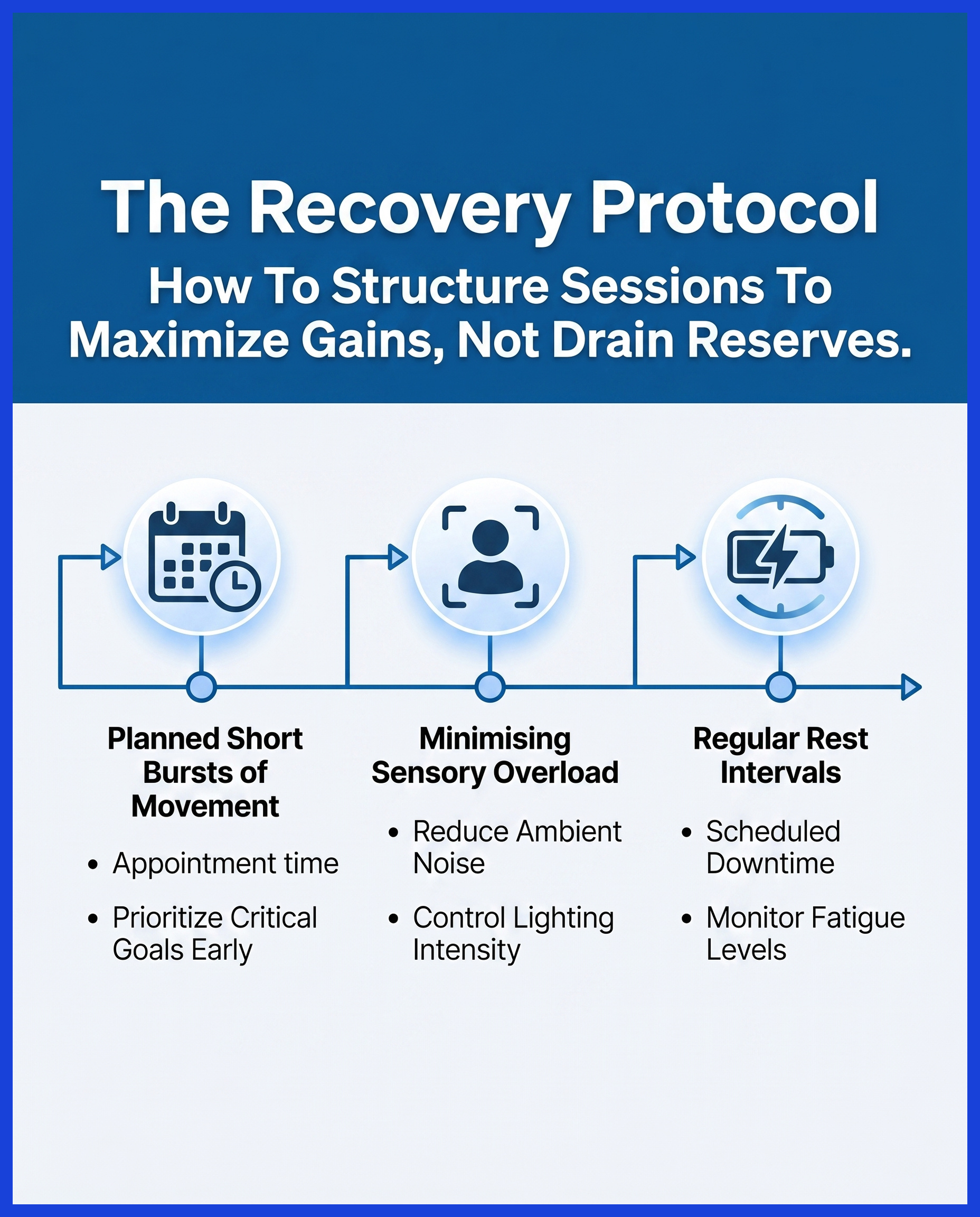
We use the energy available for purposeful movement, then adjust the session before exhaustion takes over. That can mean reducing sensory overload and choosing short, focused bursts of practice instead of a long appointment that leaves someone depleted.
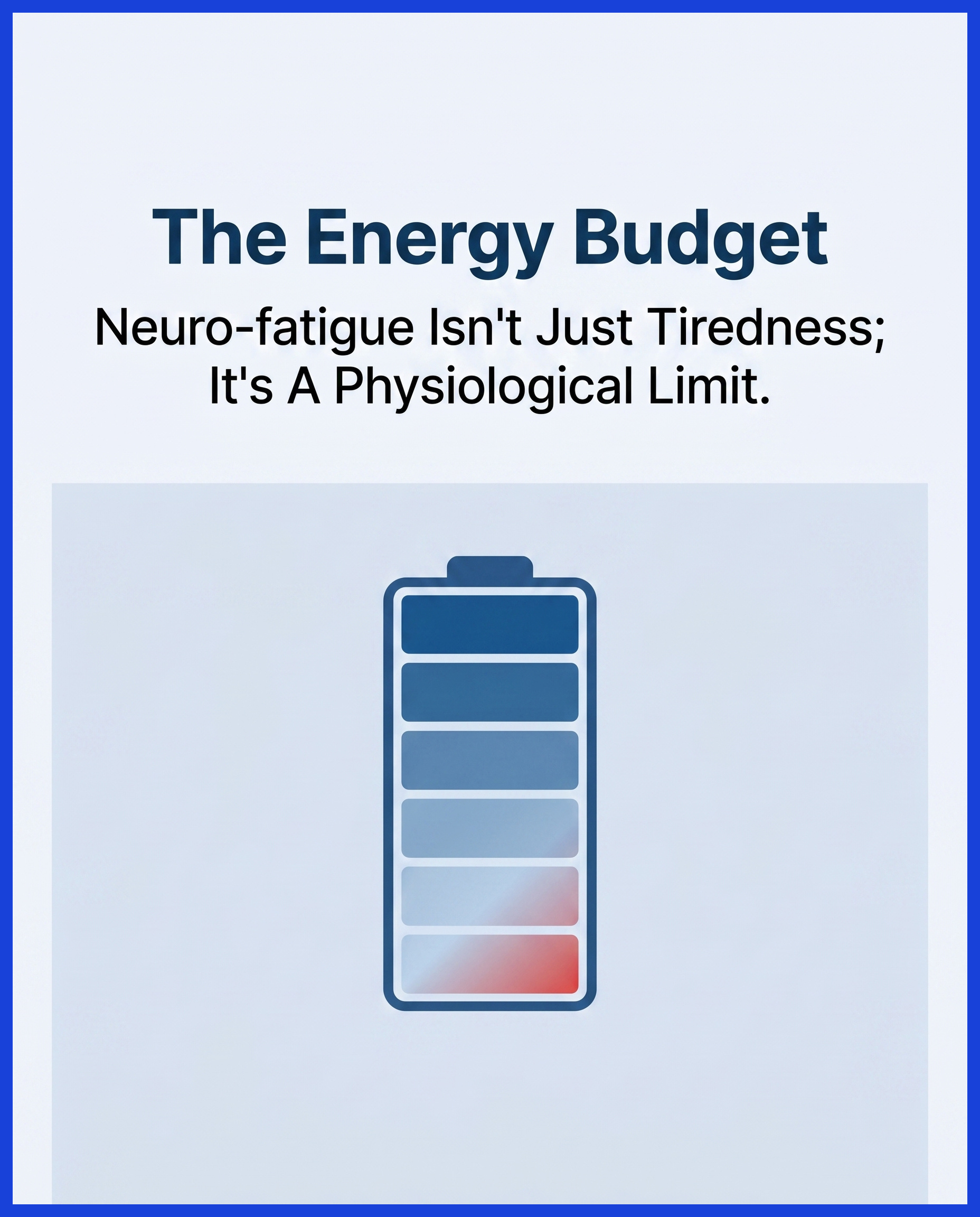
Think of energy as a limited budget. If too much of it is spent getting through a session, there may be less available for the movement we are trying to practise.
For example, a person recovering from a stroke may find that travelling to a clinic creates so much fatigue that the appointment is less productive. Bringing therapy to their home removes that journey and gives us a chance to focus the session on movement.
This does not mean avoiding effort. It means choosing effort carefully, with the aim of building mobility and independence over time.
Who is this for?
This approach is for people whose neurological condition makes movement difficult and whose fatigue affects what they can manage in therapy. It may also help families trying to understand why pushing through every session is not always useful.
My practice focuses on stroke and brain injury recovery, spinal cord injuries, multiple sclerosis and Parkinson’s disease. Home or care facility appointments may be particularly relevant when getting to a clinic is physically difficult or uses too much energy.
What does it cost?

The source material does not give a price for home neuro-physiotherapy. Schedule a call to discuss the service and ask about fees before making a decision.
What are the risks?
The main risk discussed here is pushing through extreme exhaustion and mistaking a longer session for a better one. Fatigue can limit how well someone takes part in rehabilitation, so it needs to be considered when planning therapy.
There is also a risk in treating every patient’s energy level as the same. Stroke, brain or spinal injury, MS and Parkinson’s can affect people differently, and the amount of activity that is useful needs individual clinical judgement.
Key Takeaways
More effort does not automatically mean faster progress. When someone is exhausted, adding more activity may make the session less productive.
Precision matters. My approach favours short, high-quality movement over long, depleting appointments.
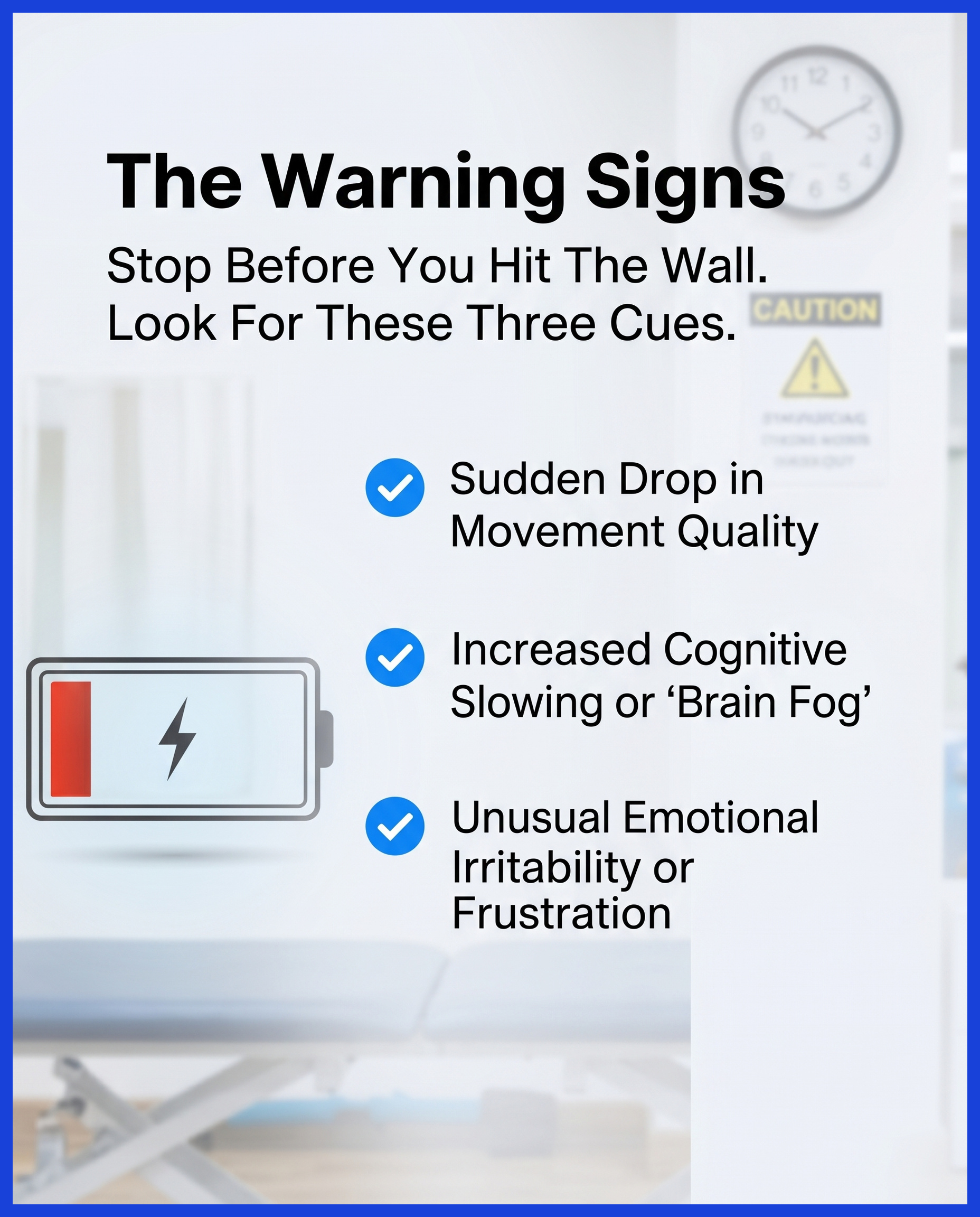
Fatigue belongs in the therapy plan. Pacing and reducing sensory overload help make better use of the energy available.
Travel is part of the energy budget. Home or care facility therapy can remove a difficult journey for people who struggle to reach a clinic.
The goal is meaningful progress. Rehabilitation should work towards mobility and independence while respecting the person’s limits.
Implementation Checklist
Tell your physiotherapist when fatigue starts to affect the quality of your movement.
Discuss whether shorter, focused periods of practice would suit your current energy level.
Notice whether noise, activity or other sensory demands make a session harder to manage.
Include travel time and its effects when considering clinic appointments.
Ask how therapy goals connect to the mobility and independence you want in daily life.
Common Mistakes to Avoid
Assuming exhaustion proves that a session was effective.
Pushing through fatigue without telling your therapist what is happening.
Judging progress only by how long you exercised.
Overlooking the energy spent travelling to and from an appointment.
I am Yllka Fillery. Through Physio Rehabilitation, I bring 15 years of NHS experience and HCPC-registered neuro-physiotherapy care to people at home or in a care facility.
If fatigue is making rehabilitation harder to manage, we can discuss an approach that respects your energy while working towards mobility and independence. Schedule a call with the link in the comments / bio.