Neurorehabilitation Starts With Movement at Home
Why Neurorehabilitation Should Start With the Movement You Need at Home
A rehabilitation plan can look right in the clinic and still miss the movement that matters at home.
Getting out of a chair, turning in a narrow hallway or reaching the kitchen may be the task that shapes your day. That is where a useful goal begins.
TL;DR
Start with one daily task that matters to the person receiving care.
Build practice around their current movement and surroundings.
Review the goal when strength, confidence or needs change.
Tell the rehabilitation team what a small milestone changed in daily life.
Your browser does not support the video tag.
What Is This? (Short Answer)
Personalised neurorehabilitation connects movement practice to the everyday tasks a person wants or needs to do.
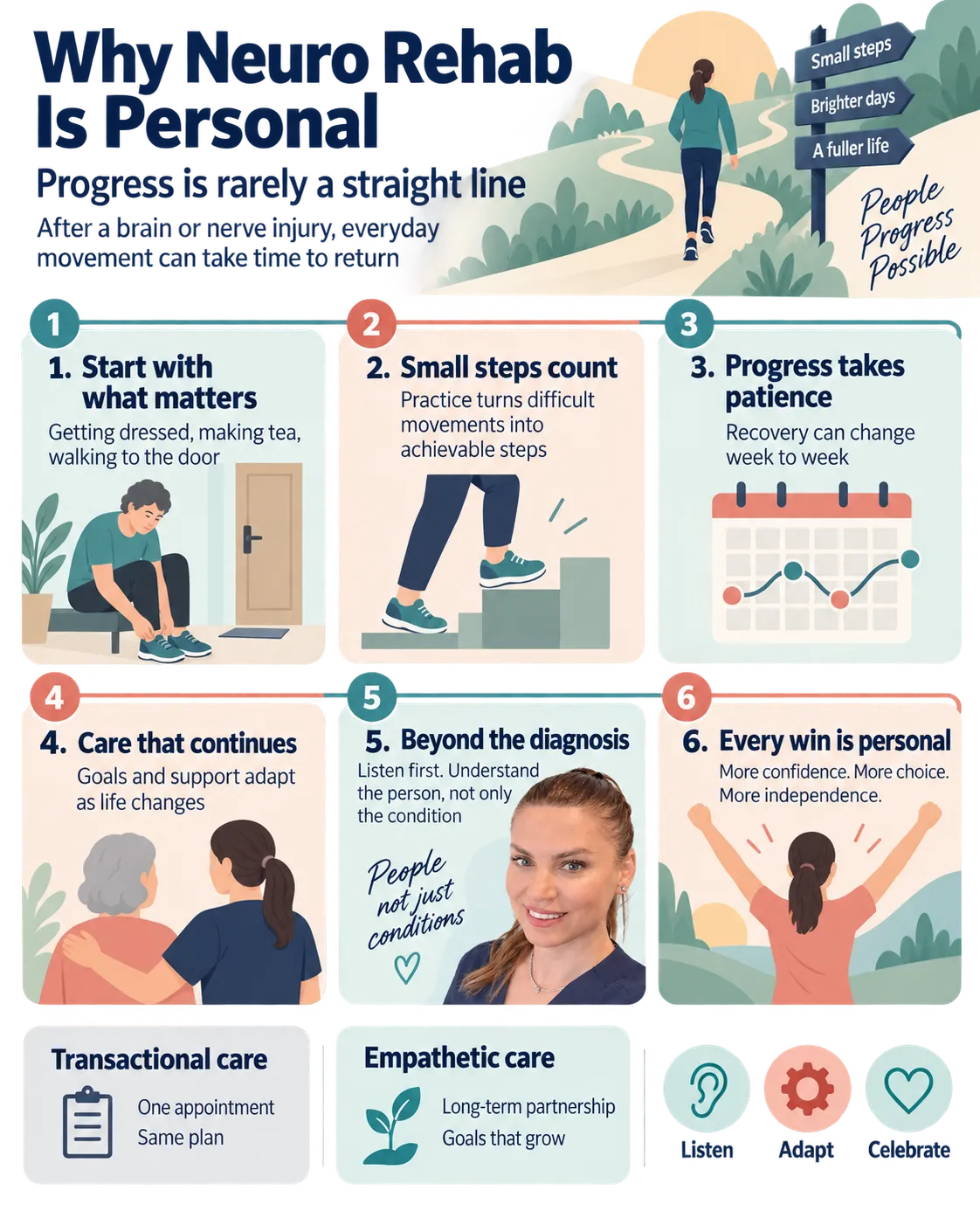
After a stroke, brain injury or spinal injury, that might mean working towards dressing, making tea or walking to the door. The task gives the rehabilitation team something meaningful to plan around and review.
How does this work?
It starts with three checks: what matters now, what can be practised safely, and what needs to change.
Choose the task. Name a daily activity rather than a broad goal such as “move better”.
Build manageable steps. Consider the person’s current movement and the space where the task happens.
Review the plan. Adjust the goal and support as strength, confidence and needs shift.
Repeated practice matters, but listening matters too. A task that was useful last month may no longer be the one the person most wants to work on.
What might a small milestone look like?
Think of someone working towards moving through a narrow hallway at home. A more confident turn may make that hallway easier to manage.
That detail tells the rehabilitation team more than “walking is improving”. It shows which movement changed and why it matters in daily life.
Who is this for?
This approach is relevant to people rebuilding everyday movement after a stroke, brain injury or spinal injury, and to the families and professionals supporting them.
It is especially useful when a clinic goal does not clearly connect to what happens at home. For someone who cannot easily travel, care may also need to take place where they live.
Physio Rehabilitation provides specialised neuro-physio care informed by 15 years of NHS experience, including home visits and care home support.
What does it cost?
The source material does not give a price for neuro-physio care, home visits or care home support.
If you are considering support from Physio Rehabilitation, schedule a call using the link in the comments or bio to discuss your situation and ask about costs.
What are the risks?
The main risk described here is losing the connection between the plan and the person’s daily life.
A plan may seem right in the clinic but overlook getting out of a chair or reaching the kitchen. Practice also needs to reflect what the person can do safely in their current surroundings.
Progress can change from week to week. When a difficult week changes the pace, review the task, the plan and the support around the person.
Key Takeaways
Make the goal specific. “Walking to the door” gives the team a clearer daily task than a general wish to walk better.
Notice what changes at home. Standing more steadily may help with a transfer; a more confident turn may help in a hallway.
Keep reviewing. A winding recovery path calls for goals and support that can adapt.
Share small wins. Explain what became easier or more meaningful, even if the change seems modest.
Implementation Checklist
Choose one daily task that matters most right now.
Describe where it happens and what makes it difficult.
Ask the rehabilitation team which steps are safe to practise.
Notice any change in movement or confidence during the task.
Review the goal when needs or abilities change.
Tell the team what a small milestone changed in daily life.
Common Mistakes to Avoid
Keeping a clinic goal without checking whether it helps at home.
Choosing practice that does not fit the person’s current movement or surroundings.
Assuming recovery should improve at the same pace every week.
Overlooking a small change because it is not a dramatic milestone.
If you or someone you care for has reached a small milestone, ask: what changed in daily life? Share that detail with your rehabilitation team. To discuss support from Physio Rehabilitation, schedule a call with the link in the comments or bio.