Early Neuro Rehab After Stroke or Brain Injury
Why Early Neurorehabilitation Matters After Stroke or Brain Injury
Waiting for rehabilitation can feel like doing nothing at the very moment you most want to help. After a stroke, brain injury or spinal trauma, the concern is that delays may allow difficult movement patterns to become more established.
Yllka of Physio Rehabilitation has seen the difference between early, intensive engagement and delayed starts over 15 years of experience. Her message is direct: neurorehabilitation is not a waiting game.
TL;DR
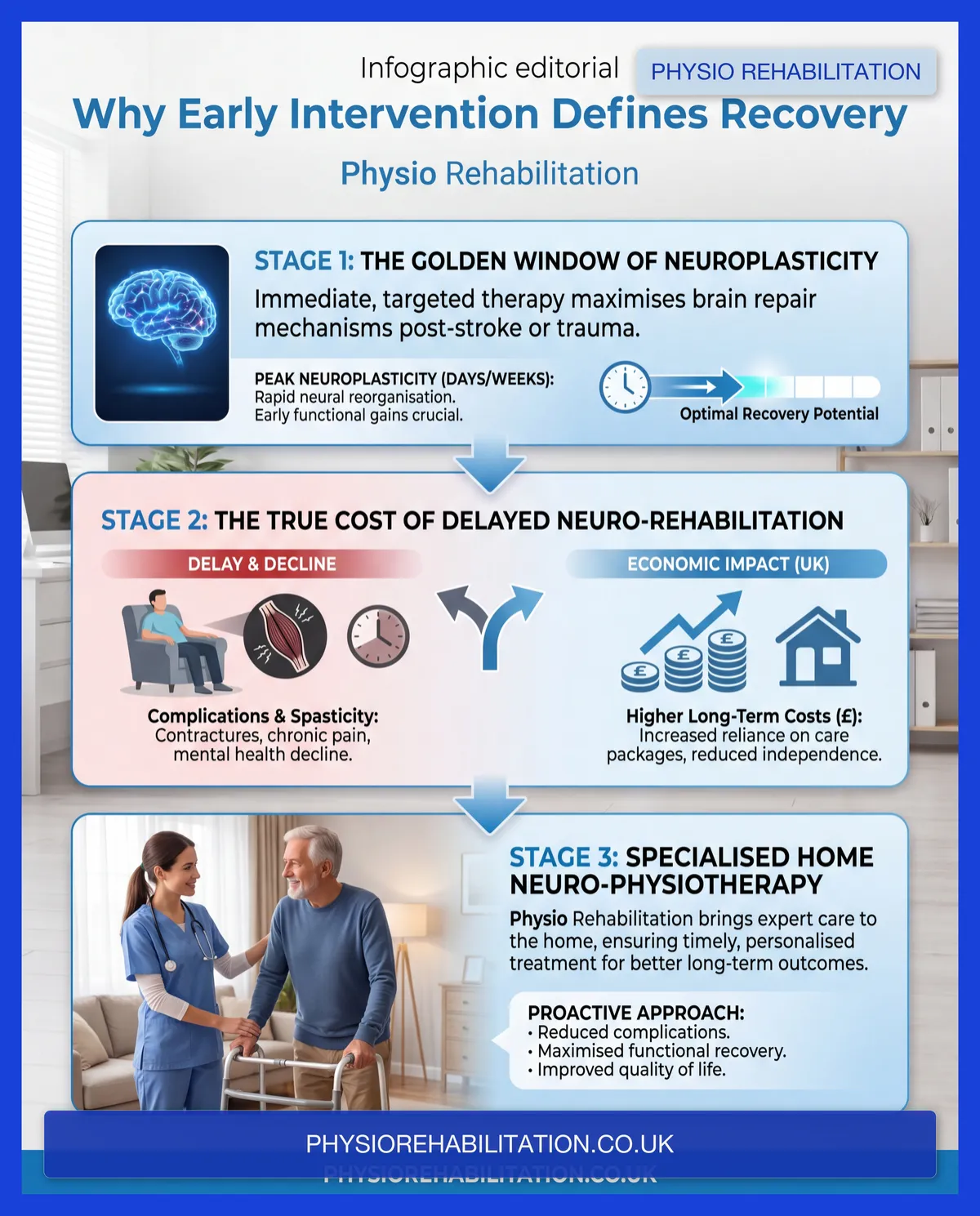
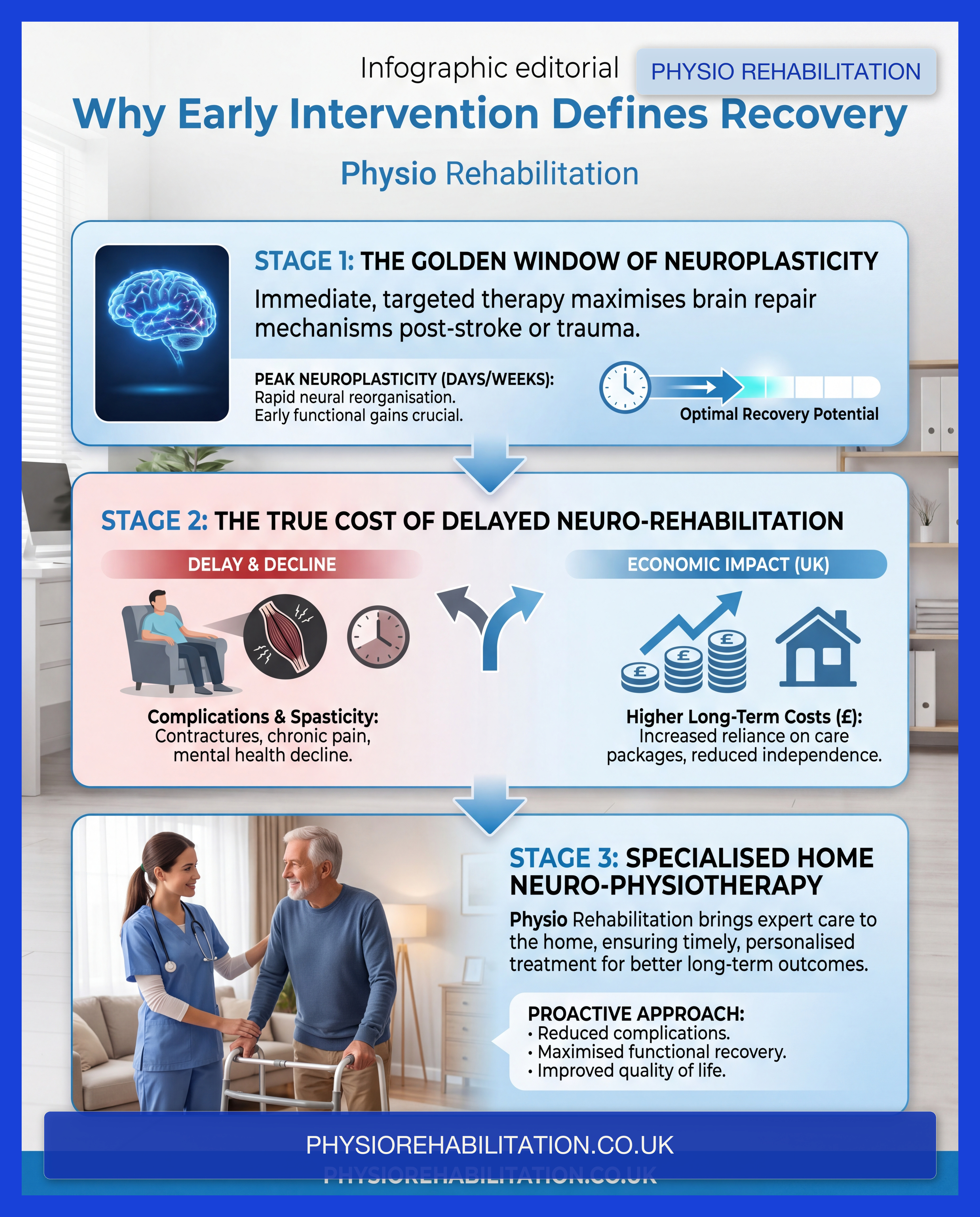
Early neurorehabilitation aims to make use of the brain’s capacity to reorganise after injury.
Waiting for an appointment or hoping for spontaneous recovery may mean losing valuable time.
Specialist physiotherapy at home can remove the travel barrier for someone who needs support.
The goal is to protect mobility and the potential for independence at home.
What Is This? (Short Answer)
Early neurorehabilitation is specialist therapy started promptly after a neurological injury to support movement and functional recovery. This article focuses on the period after stroke, brain injury or spinal trauma, when the brain is primed for change.
Neuroplasticity is the brain’s ability to reorganise. Yllka describes the early period as a “biological golden period”, which is why she urges families to seek specialist input rather than simply wait and hope.
How does this work?
Specialist rehabilitation gives recovery active, guided attention while the brain is adapting. The video warns that long waits may contribute to physical regression, abnormal movement patterns becoming established, and loss of movement ability that might otherwise have been preserved.
Home visits address a practical obstacle: getting to a clinic can be difficult after neurological injury. Physio Rehabilitation describes an HCPC-registered approach that brings therapy to the person’s home, so travel need not be the reason for delaying a conversation about care.
For example, consider someone recovering from a stroke who is waiting for a community appointment and finds travel difficult. That is the situation the video addresses: arranging specialist input at home may allow rehabilitation to begin without adding a clinic journey. It is an example of the approach, not a claim about a particular patient’s result.
Who is this for?
This is for people recovering from stroke, brain injury or spinal trauma, and for the families helping them arrange care. It is especially relevant when a service waiting list or the journey to appointments is slowing access to rehabilitation.
The purpose is personal as well as clinical. Receiving therapy at home can support the dignity of remaining in familiar surroundings while working towards mobility and independence.
What does it cost?
The video gives no price for home neurorehabilitation. Ask about fees, availability and what an assessment would involve when you schedule a call.
The cost Yllka stresses in the video is the possible cost of waiting: time without specialist intervention while movement difficulties may become more established. That concern does not establish what will happen for any one person.
What are the risks?
The main risk discussed is delaying specialist rehabilitation while waiting for an appointment or spontaneous recovery. Yllka warns that weeks without intervention may narrow the opportunity to preserve movement and independence.
Recovery differs from person to person, so an early start cannot promise a particular outcome. A qualified clinician can assess the person’s needs and explain what rehabilitation is appropriate.
Key Takeaways
Act on the need for rehabilitation early. Do not assume a waiting list is the only route to specialist input.
Consider the travel barrier. Home physiotherapy may make it easier to start and attend sessions.
Keep the goal meaningful. The reason for seeking therapy is to support movement, function and independence in daily life.
Discuss the individual situation. The right approach depends on the injury and the person’s current abilities.
Implementation Checklist
☐ Note the injury, current movement difficulties and when rehabilitation last took place.
☐ Ask what specialist neurorehabilitation is available and how soon it could begin.
☐ If travel is difficult, ask whether assessment and therapy can take place at home.
☐ Ask how the proposed therapy relates to the person’s mobility and independence goals.
☐ Confirm the clinician’s HCPC registration and ask about fees before booking.
Common Mistakes to Avoid
Assuming recovery will progress adequately without specialist assessment.
Letting difficulty travelling to a clinic become a reason to stop seeking care.
Waiting without asking what other rehabilitation options are available.
Expecting a guaranteed result from any single start date or course of therapy.
If a stroke, brain injury or spinal trauma has left you or someone you love waiting for rehabilitation, take the next step towards an individual discussion. Schedule a call with the link in the comments / bio.