General Physio or Neuro Rehab: Stroke, MS, Parkinson’s
General Physio or Neuro-Rehab: Which Fits Stroke, MS or Parkinson’s?
Recovery time can be lost when a neurological condition is treated like a standard muscle or joint problem.
A general physiotherapist can help with pain, strength, posture, balance and movement after injury. With stroke, MS, Parkinson’s, brain injury or spinal injury, the assessment must also ask what the nervous system can relearn and what is blocking progress.
TL;DR
General physiotherapy can address pain and movement problems, but neurological conditions may need a different assessment and plan.
Neuro-rehab uses repeated, targeted practice and considers stiffness, weakness, fatigue and altered sensation.
Every exercise should have a clear link to a daily task, such as standing, transferring or walking.
For stroke recovery exercises at home, assessment comes before choosing what is safe and useful.
What Is This? (Short Answer)
Specialist neuro-physiotherapy is physiotherapy planned around how a neurological condition affects movement and daily function. It asks what the person needs to relearn, what is making that difficult and how practice can carry over into life at home.
The distinction matters when the main challenge follows a stroke, or relates to MS, Parkinson’s, brain injury or spinal injury. A plan focused only on a painful joint or weak muscle may miss part of the problem.
How Does Neuro-Rehab Work?
Neuro-rehab connects targeted practice to a task the person needs to do. Repetition matters, but so does choosing the right task for the person in front of the physiotherapist.
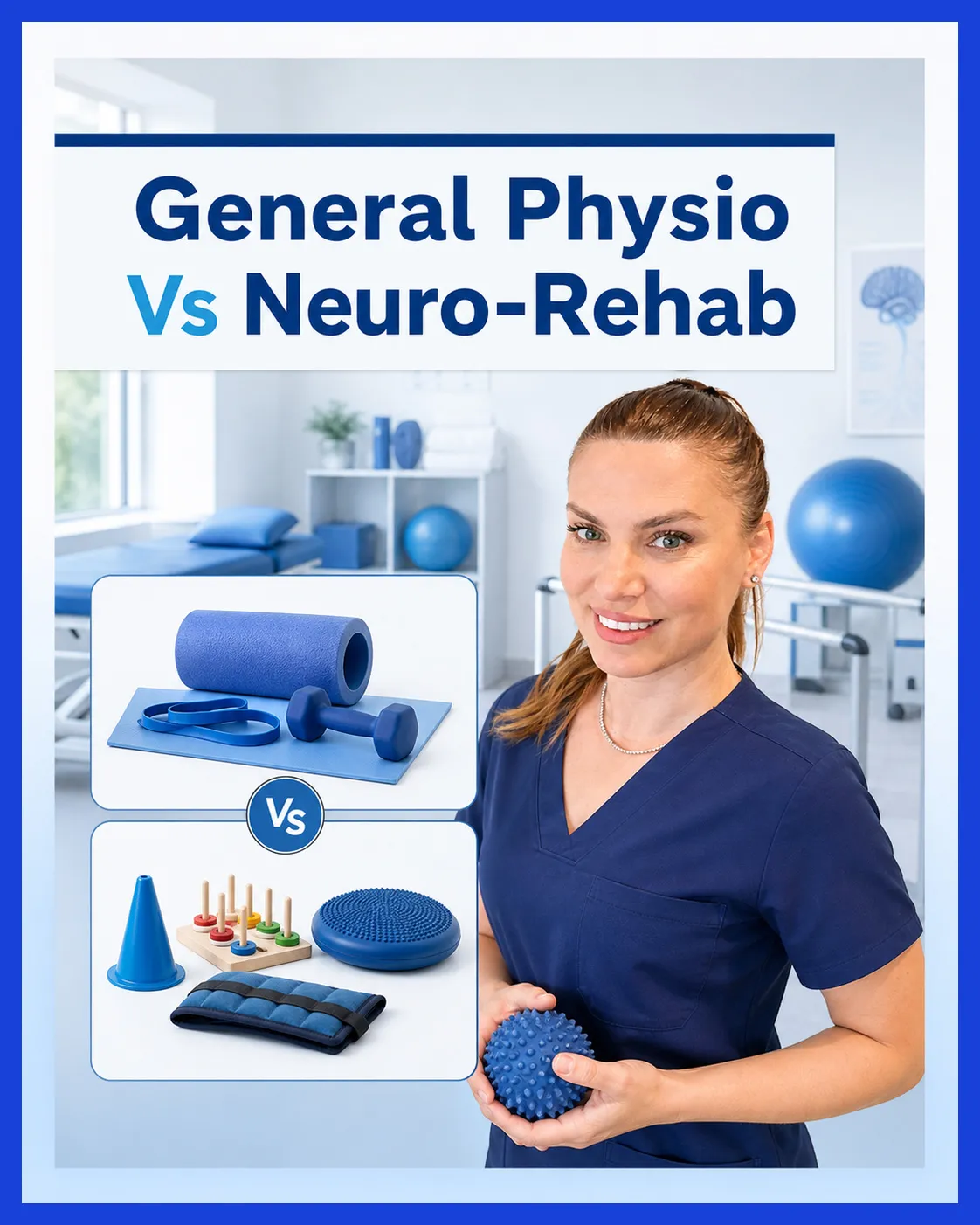
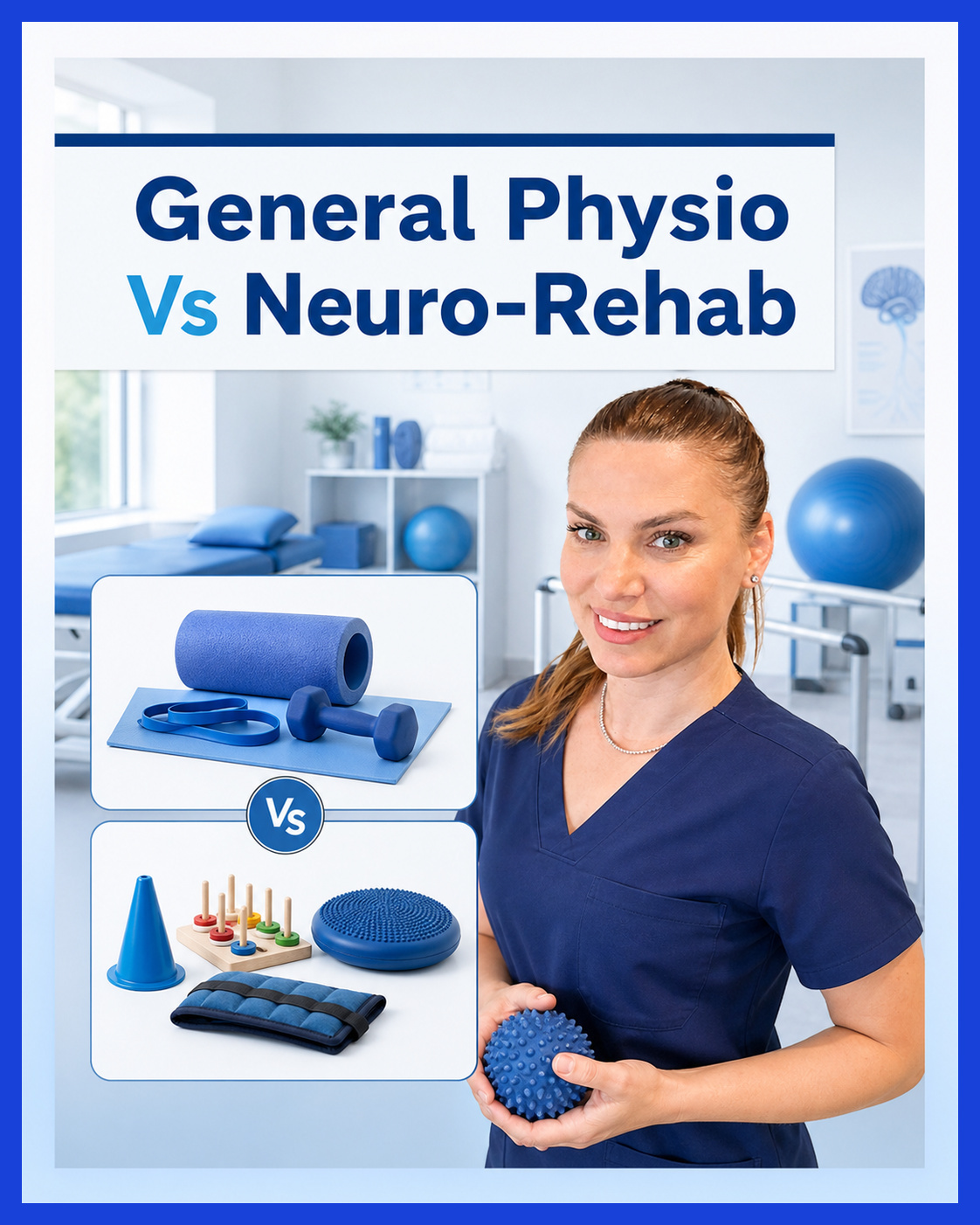
The video identifies three areas to consider: neuroplasticity optimisation through repeated, targeted practice; management of tone and spasticity alongside stiffness, weakness, fatigue and altered sensation; and functional carryover into standing, transfers, walking, stairs and daily routines.
For example, if someone is practising standing after a stroke, the purpose should be clear. The assessment should establish whether that practice is safe and how it relates to a real need, such as standing more safely during a transfer.
That link between exercise and function is central. A person or family should not be left guessing why an exercise has been chosen.
Who Is This For?
Neuro-rehab is relevant when a neurological condition is shaping the person’s movement and daily life. The conditions discussed in the video are stroke, MS, Parkinson’s, brain injury and spinal injury.
It can matter at home and in care homes. Travel may be exhausting, walking may be unsafe, or the person may be housebound or bed-bound.
If the concern is a general mobility issue, a general physiotherapist may be an appropriate starting point. If the concern is neurological condition management, ask whether the physiotherapist has the experience to assess that specific situation.
What Does It Cost?
The video does not state a price. If you are considering an assessment, ask about the fee, what the assessment includes and how any proposed plan would be explained before booking.
What Are the Risks?
The main risk raised in the video is losing recovery time with a plan that does not address the neurological problem. An exercise may sound useful in general while being poorly matched to someone’s symptoms, function or circumstances.
That is especially relevant to stroke recovery exercises at home. The exercise itself is only one part of the decision; an assessment must determine whether it is safe, useful and suited to the individual.
Key Takeaways
Start with the condition. Ask whether the main issue is general mobility or movement affected by stroke, MS, Parkinson’s, brain injury or spinal injury.
Ask what the nervous system needs to relearn. This changes how practice is selected and explained.
Connect practice to daily life. Standing, transfers, walking, stairs and routines give exercises a practical purpose.
Check the professional background. NHS experience, HCPC registration and CSP standards are useful points to discuss when choosing a physiotherapist.
Implementation Checklist
Describe the neurological condition and the movement problem you want assessed.
Explain what happens during daily tasks, such as standing, transferring, walking or using stairs.
Mention stiffness, weakness, fatigue or altered sensation where relevant.
Explain whether travel is exhausting, walking is unsafe, or care needs to take place at home or in a care home.
Ask how each proposed exercise supports a specific daily task and how its safety will be assessed.
Common Mistakes to Avoid
Using a standard muscle or joint plan without considering the neurological condition.
Choosing stroke exercises for home use before checking whether they suit the person.
Repeating exercises without knowing which function they are intended to improve.
Overlooking how fatigue, altered sensation or unsafe walking affect the plan.
The right starting point is an assessment that makes the purpose of treatment clear. Schedule a call with the link in the comments / bio.