Delayed Neuro Rehab After Stroke or Injury
Delayed Neuro-Rehabilitation: What Waiting Can Cost After a Stroke or Injury
Waiting for rehabilitation can feel like the safest option when life has just changed. But after a stroke, brain injury or spinal trauma, time without specialist support may make movement and independence harder to regain.
In 15 years of experience, I have seen the difference between people who engage with rehabilitation early and those whose start is delayed. The aim is to use the opportunity for recovery while keeping care centred on the person and their life at home.
TL;DR
Neuro-rehabilitation supports recovery of movement and function after a neurological injury.
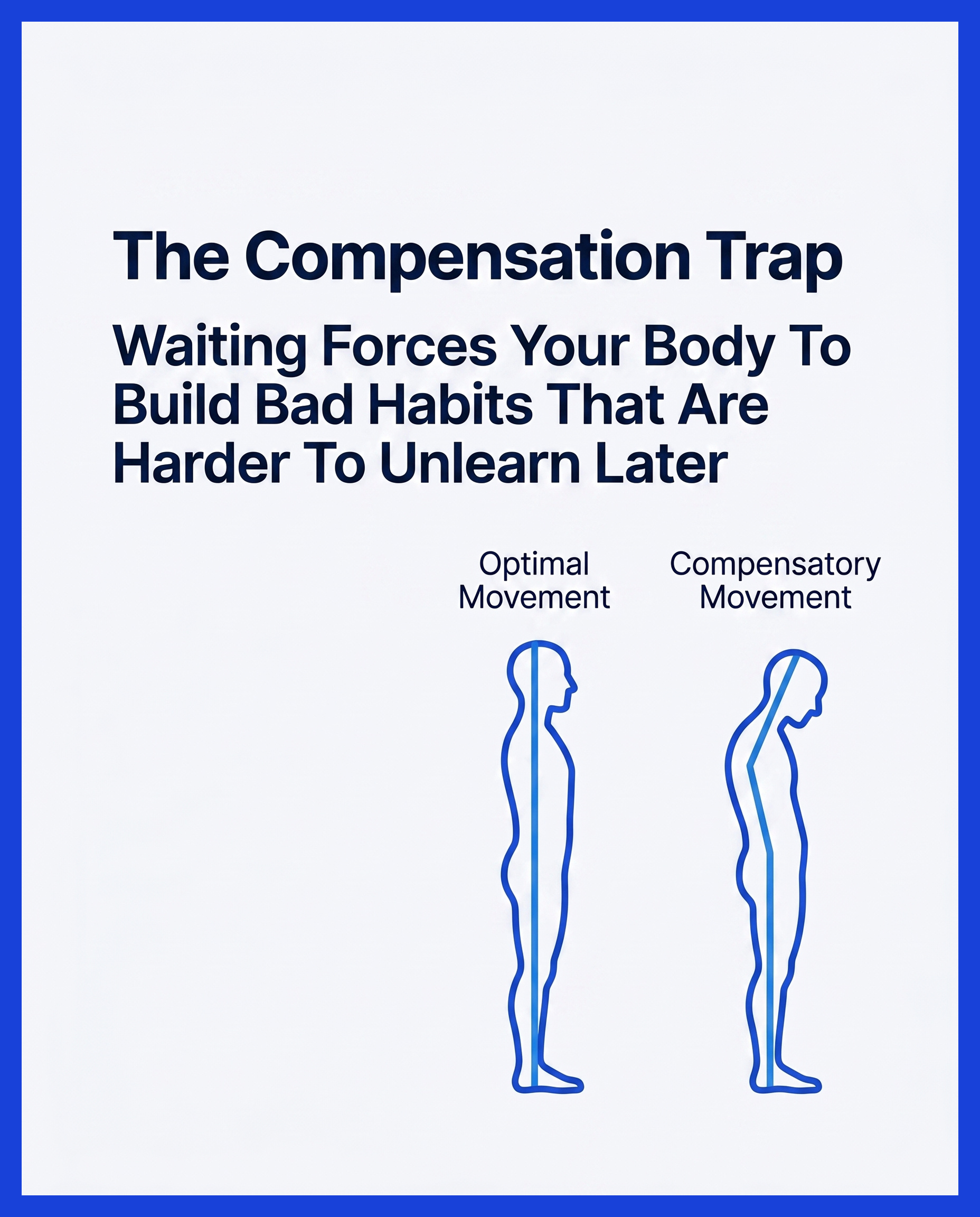
Delays may allow physical regression and unhelpful movement patterns to become more established.
Early, intensive support should be guided by the person’s clinical needs.
Home-based care can remove the fatigue and stress of travelling to appointments.
What Is This? (Short Answer)
Neuro-rehabilitation is specialist therapy that helps a person work on movement and independence after a stroke, brain injury or spinal trauma.
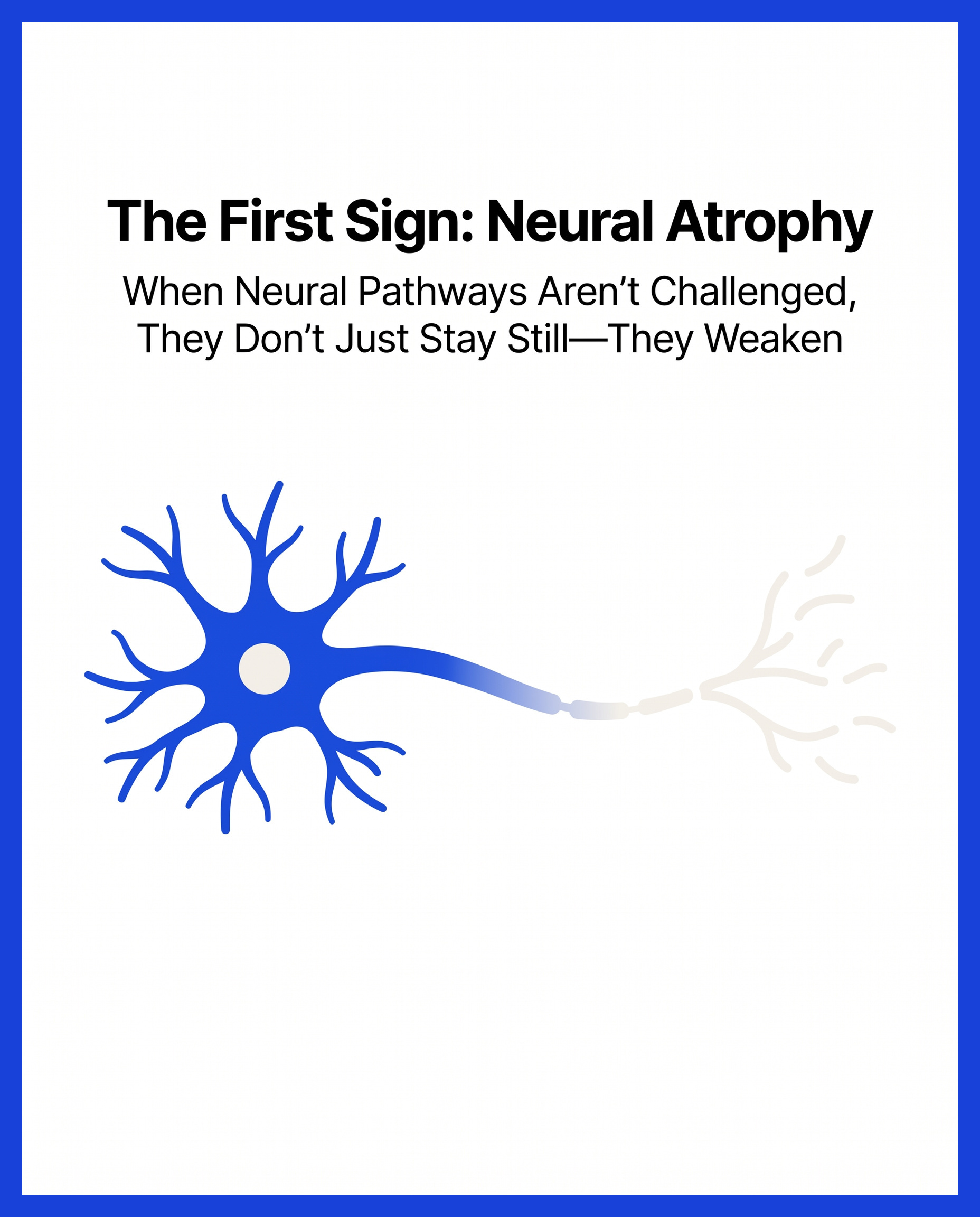
The brain’s ability to adapt, known as neuroplasticity, is central to this work. Rehabilitation gives that process purposeful support through therapy matched to the person’s needs.
How Does This Work?
Specialist neuro-physiotherapy starts by identifying the movements and daily activities that matter to the person, then working on them through a tailored rehabilitation plan.
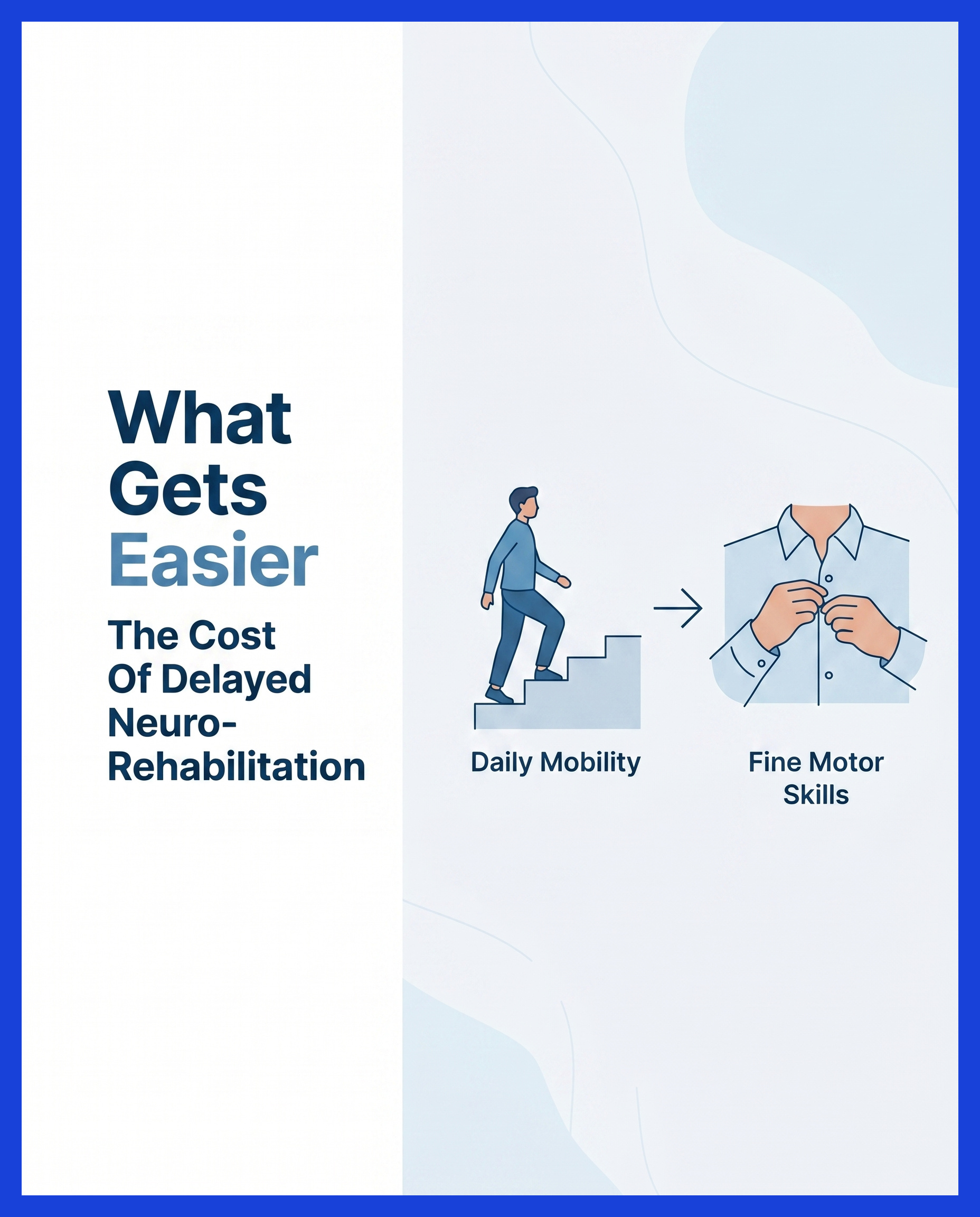
Consider someone returning home after a stroke who finds moving around the house difficult. Bringing therapy into that setting lets the work focus on movement where the person needs it, without using their energy on a journey to a clinic.
The concern with waiting is more than a missed appointment. Physical regression can occur, and abnormal movement patterns may become harder to change over time. Early engagement gives rehabilitation a chance to address those difficulties sooner.

Who Is This For?
This approach is for people recovering from a stroke, brain injury or spinal trauma who need specialist help with movement and independence.
It also matters to families weighing up how someone can receive care while remaining at home. For many people, dignity means being able to work towards recovery in familiar surroundings, with less fatigue and stress from travel.
What Does It Cost?
The video does not give a treatment price. The cost it asks you to consider is the potential effect of delaying specialist rehabilitation.
Time spent waiting may mean lost opportunities to preserve movement and muscle memory. If you are considering home-based therapy, ask about fees and the proposed plan during a call so you can make an informed decision.
What Are the Risks?
The main risk described here is that a delayed start may allow physical regression and unhelpful movement patterns to become more established.
Recovery is individual, so acting early does not promise a particular result. The right starting point is a professional assessment and therapy suited to the person’s condition, rather than simply doing more activity without guidance.
Key Takeaways
Timing matters. A long wait can reduce the opportunity to address movement difficulties early.
Specialist input matters. Stroke, brain injury and spinal trauma call for a rehabilitation approach shaped around neurological recovery.
Independence is the goal. Therapy should connect movement work to life at home.
Travel has a cost too. Home-based care can keep energy and attention on rehabilitation.
Implementation Checklist
Identify the movement or daily activity that is most difficult right now.
Ask when a specialist neuro-rehabilitation assessment can take place.
Discuss whether therapy at home would reduce travel fatigue and help focus on daily needs.
Check that the physiotherapist is HCPC-registered.
Ask how the proposed therapy will be tailored to the person’s condition and goals.
Common Mistakes to Avoid
Assuming that waiting for spontaneous recovery is the only option.
Looking only at appointment availability while overlooking changes in movement during the wait.
Treating mobility as separate from the person’s independence and dignity at home.
Expecting one rehabilitation plan to suit every neurological injury.
What Should You Do Next?
If you or someone close to you is waiting after a stroke, brain injury or spinal trauma, discuss specialist support now. Physio Rehabilitation offers an HCPC-registered approach that brings therapy to the person at home.
Schedule a call with the link in the comments / bio.