After Hospital Neuro Rehab: Safe Steps at Home
After Hospital Neuro Rehab: What Is the Next Safe Step at Home?
Discharge can feel like progress on paper while moving around at home still feels unsafe.

That space between a time-bound hospital plan and greater independence is the rehab gap. After a stroke, brain injury, spinal injury, or with MS or Parkinson’s, the next step depends on what the person can do safely in the rooms they use every day.

TL;DR
Hospital rehab has a time-bound role in acute recovery and discharge planning.
At home, check transfers, standing, walking, balance and stairs in the spaces the person actually uses.
Exercises should match personal goals and change when fatigue, freezing, tone, pain or fear changes what is possible.
Specialist neuro-physiotherapy can assess and progress rehabilitation at home or in a care home.
What Is This? (Short Answer)
Specialist neuro-physiotherapy after discharge is an assessed, personal rehabilitation plan for living more safely and independently at home. It connects clinical work on movement, strength, balance and gait with practical tasks such as transferring, walking through a room or using stairs.
Physio Rehabilitation provides home and care home assessments, hands-on progression and neurological condition management. The plan is guided by the person’s condition, goals and response on the day.
How does this work?
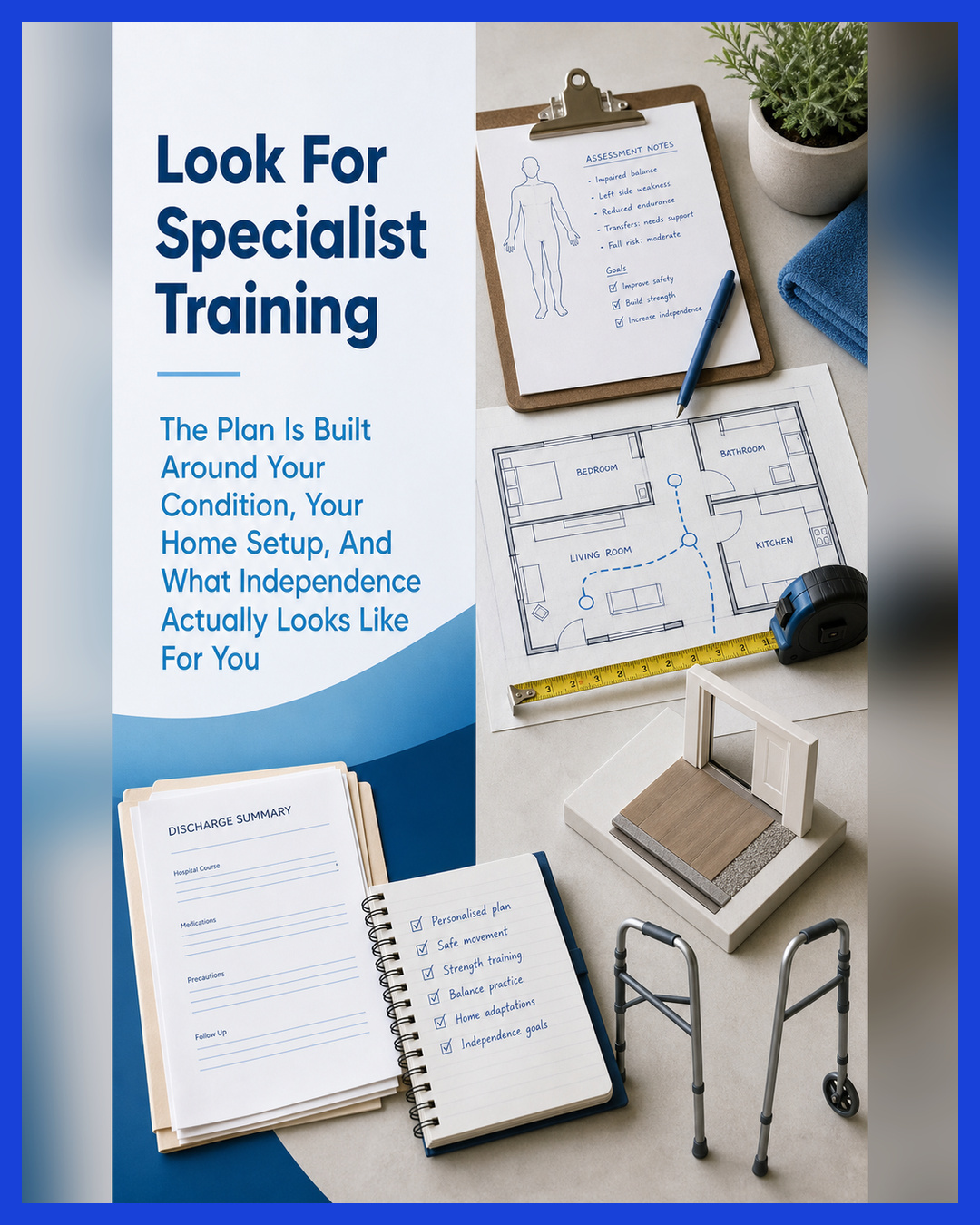
It starts with the movement that matters in daily life, then sets a suitable next step. A clinician checks what the person can do safely, how their neurological condition affects that task, and whether the current plan needs to change.
For example, someone may have practised walking in a hospital ward bay but still feel uncertain walking between rooms at home. The useful question is how they manage that real route, including balance, fatigue and confidence, before deciding what to practise next.
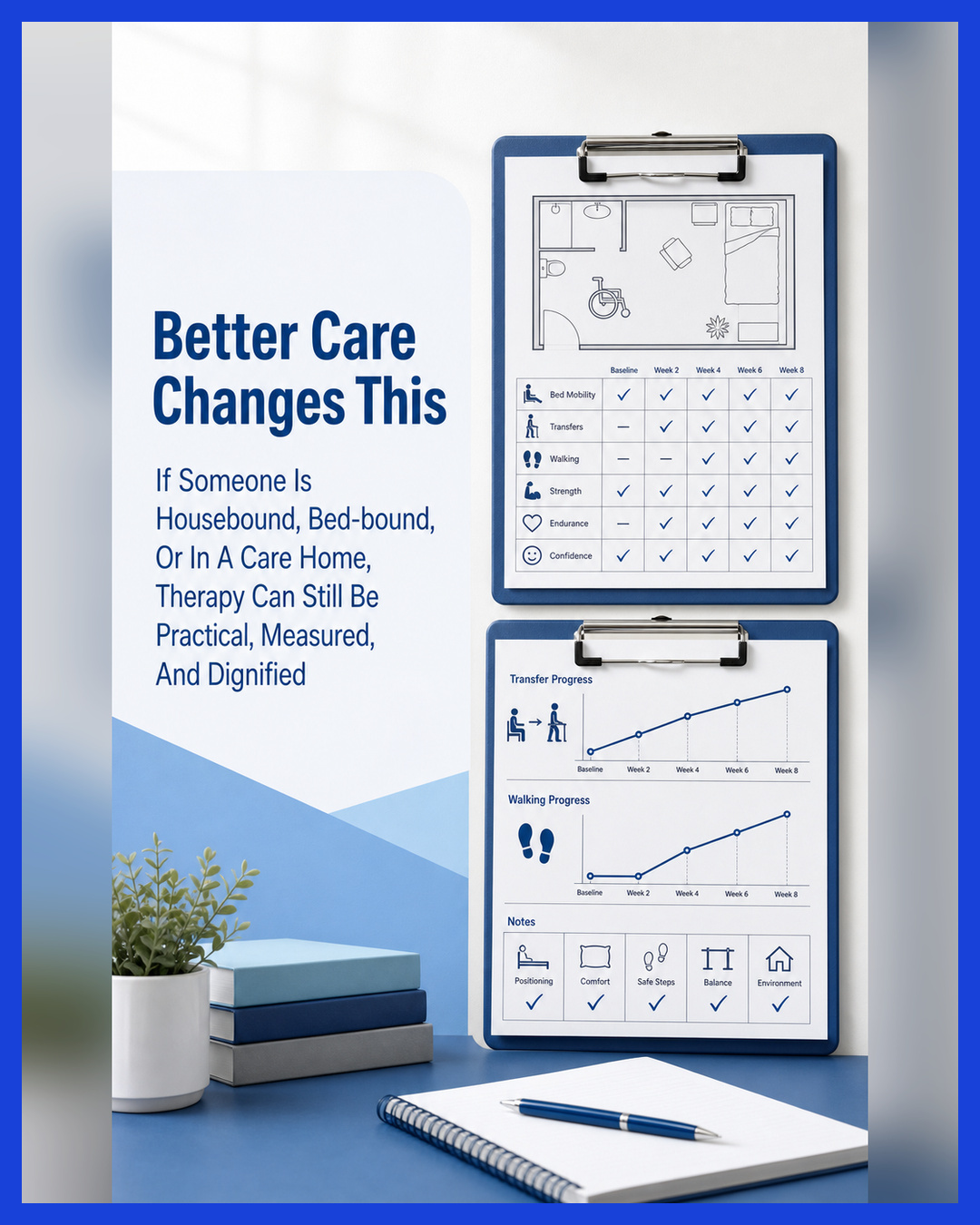
Review matters too. Repeating the same exercise sheet may miss a change in walking, tone, pain or freezing episodes. Progression should follow assessment rather than a fixed template.
Who is this for?
This is for people whose neurological needs still shape daily movement after hospital rehab. The source video discusses stroke, brain injury, spinal injury, MS and Parkinson’s.
It may be particularly relevant when transfers, standing, walking, balance or stairs remain difficult. Home or care home visits can also reduce the travel burden for someone who is housebound, bedbound or too tired to travel after appointments.
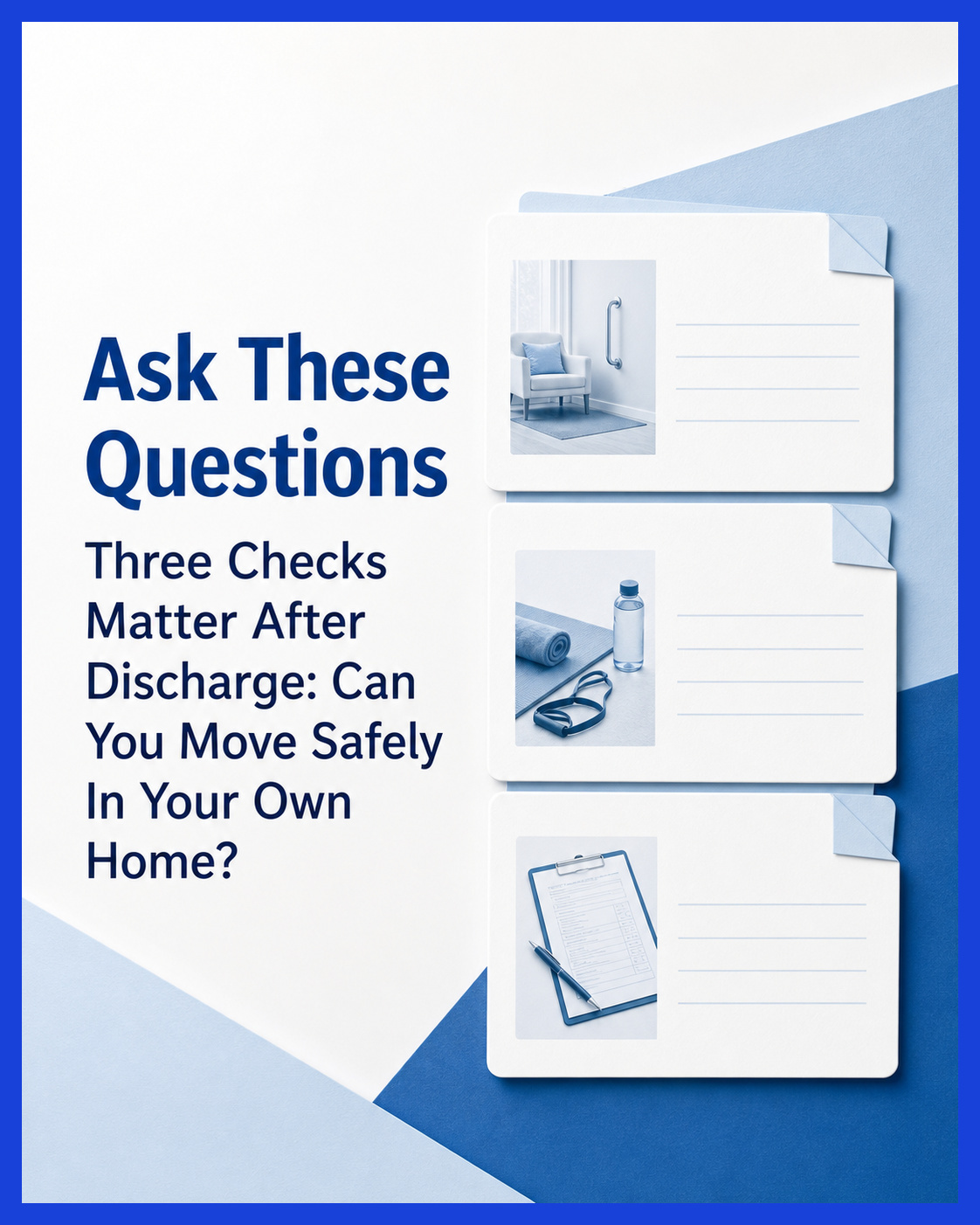
Families can use the same questions when discharge is close: Can the person move safely in their own rooms? Does the plan reflect their goals? Is someone reviewing changes often enough to progress the work?
What does it cost?
The video does not give a price for assessment or treatment. If you are considering support from Physio Rehabilitation, ask about the cost and visit arrangements when you schedule a call.
What are the risks?
The main concern is settling into a routine that does not reflect what is happening at home. An exercise that looks suitable on a generic sheet may miss fatigue, freezing, tone, pain or fear that changes how a person moves that day.
Hospital rehab is important, but its timeline is built around acute recovery, discharge planning and safety thresholds. Once home, the person’s rooms and daily tasks reveal what the next plan needs to address.
Key Takeaways
Start with safety at home. Look at transfers, standing and walking where they actually happen.
Connect exercises to a goal. The work should support a meaningful task, such as moving between rooms or managing stairs.
Account for the day’s symptoms. Fatigue, freezing, tone, pain and fear can change the right level of activity.
Review and progress the plan. Rehabilitation needs reassessment as the person’s abilities and needs change.
Implementation Checklist
Identify the daily movement that feels least safe or most limiting at home.
Check whether the person can transfer, stand and walk safely in their usual spaces.
Write down the goal each current exercise is meant to support.
Note when fatigue, freezing, tone, pain or fear affects the task.
Ask who will reassess the plan and decide when it is ready to progress.
If travel is difficult, ask whether a home or care home assessment is suitable.
Common Mistakes to Avoid
Assuming discharge means everyday movement already feels safe.
Choosing a popular stroke exercise online before identifying the next safe step.
Using a standard exercise sheet without considering the neurological condition.
Repeating a routine without reviewing changes in symptoms or ability.
With 15 years of NHS experience and HCPC registered care, Physio Rehabilitation’s focus is steady, tailored rehabilitation that protects dignity and supports greater independence at home.
If you are searching for stroke recovery home exercises UK, start with the question from the video: What is your next safe step? Schedule a call with the link in the comments / bio.